Share Charles Russell Middaugh's obituary with others.
Invite friends and family to read the obituary and add memories.
Stay updated
We'll notify you when service details or new memories are added.
You're now following this obituary
We'll email you when there are updates.
Select your format and elements to print

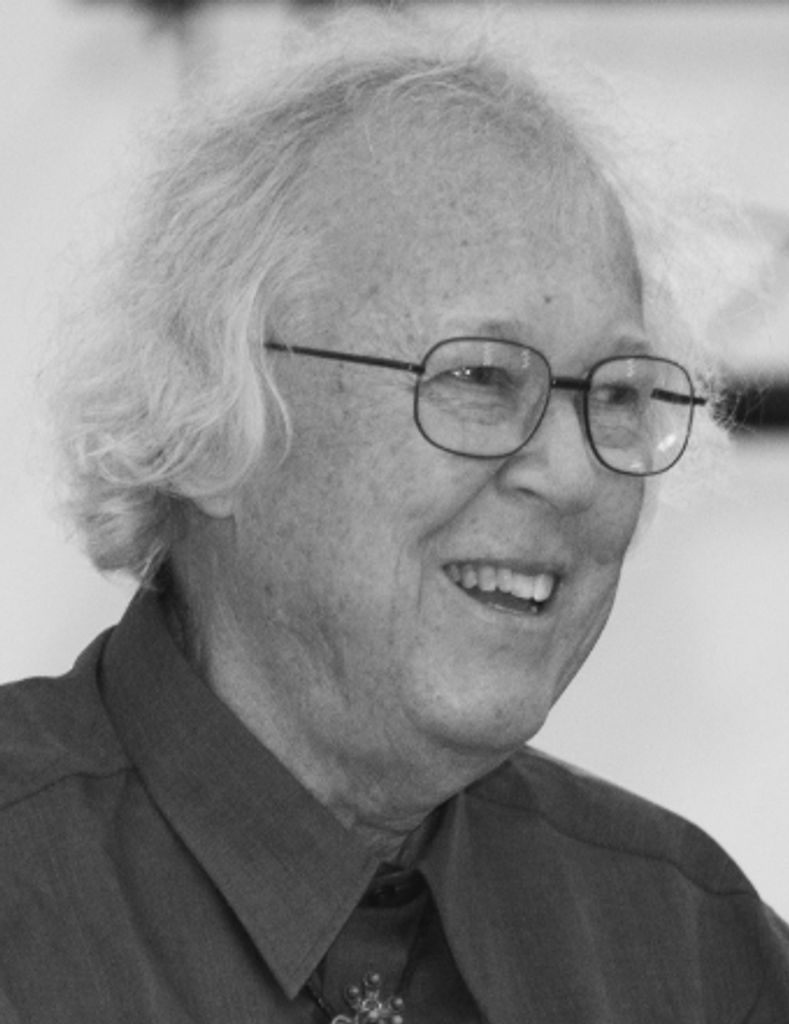


Charles Russell Middaugh
Jul 13, 1947 — May 3, 2025
Charles Russell Middaugh was born July 13, 1947 and passed on May 3, 2025. A celebration of his life is planned for August 23 in Lawrence, Kansas. For information about the celebration, please email infoaboutruss@gmail.com.
Russ's siblings wrote an obituary focused more on his personal life, while his friend and colleague wrote a version for Kansas University. Both are presented here.
Personal Obituary
Russ went by his middle name because his father insisted that all his children go by their middle names for reasons that were never made clear. He started life as a sickly child with poor eyesight, but as he grew older, and had surgery to correct his eyesight, he grew stronger, eventually becoming a championship long-distance runner in high school, holding the speed record in California for several years. That love of running never left him and for most of his life he was known for running five, ten, even fifteen miles a day. Even later in his life, when running became impossible for him, he spent time walking every day, enjoying watching the eagles as he strolled around the lake near his home in Lawrence, Kansas.
Russ had many passions in his life, and science and chemistry were two that he discovered at an early age. In high school, he kept a robust chemistry lab in the family garage and experimented there with his friends. When his father's car caught fire and the firemen came to put it out, Russ had to take them aside to warn them that in the garage there was a large block of sodium, which would explode if it got wet. The garage was saved in the end, while the block of sodium was placed in the driveway and hosed down, much to the enjoyment of neighborhood children.
Russ was politically active and even worked with the United Farm Workers, acting as a driver for Cesar Chavez for a short time. He studied at Cornell and University of California, Santa Cruz. When it became clear that he was not going to be able to renew his scholarship, he knew that he would be drafted to go to Vietnam. He opted instead to enlist in the army where he worked to keep the radios running. He was in the special forces, and while he didn't talk about his time in the military, he was sometimes able to put his skills to good use. He would tell the story of how cougars were killing his sheep, and how one night he stood guard with a rifle over the body of a sheep that had been killed by a cougar. He climbed a tree and waited by the light of the full moon, but the clouds eventually covered the moon. When the light returned, the sheep was gone and Russ was forced to concede to the big cat that night.
Russ's contributions in science are too many to list here. When asked by his brother, Dallas, several years ago which Covid vaccine was the best, Russ casually said "Get the Moderna, that's the one I worked on." He was referring to his groundbreaking work with mRNA that laid the foundation for the rapid development of the Covid vaccine.
Russ loved animals. As a kid he often rescued fallen birds and other small creatures, including spiders. In fact, Russ enjoyed collecting snakes with his sister, Genie, much to the consternation of their mother, Esta. Esta was deathly afraid of snakes and managed to find (and, unfortunately, open) a box of them one day. No one was hurt that day, fortunately, but the snakes were never seen again. His first pet when he returned from Vietnam was a guinea pig. Genie recalls that he did a great guinea pig imitation, and that this was a talent he would retain for the rest of his life.
Russ had a great affinity for wolves, something that is easy to see in the art that adorns the walls of his home and in his t-shirt collection. After he retired from Kansas University, he worked with a Washington state organization on a tracking system for wolf packs. But of all animals, he loved dogs the most. He and his first dog, Haldane, were inseparable, and he would tell the story of how he left his new puppy at home when he walked to work in Laramie, Wyoming, only to find an hour or so later that the dog had managed to escape the yard and track Russ down at his office. Haldane joined Russ every day after that.
Several dogs followed over the years, and Russ was especially fond of border collies, which he trained and used to herd sheep in competition. As with so many of his passions, Russ made close friends in the field. Eventually he started to adopt other breeds, and he and his wife have cared for many dogs, cats, and horses over the years.
Russ's passions were so numerous. He loved to teach. He volunteered to work at Haskell Indian Nations University to encourage Native Americans to pursue careers in science. He loved music and often sang, making up lyrics as he went. He loved race cars, and for a time he hoped to be a race car driver. But other than his friends, family, and dogs his greatest passion was for books. New books, old books; first editions and signed copies; random books that caught his eye; he loved them all so much. How he found the time to read as much as he did, we will never know; but we will always remember that when travelling his first priority was to check out the local bookstore.
More than any of these things, however, Russ valued the people in his life. Quick with a joke or wry comment, and always available to listen if you had something on your mind, Russ was devoted to the many people that he loved, especially his wife, Pat; his daughter, Kelsey; his two grandchildren, Eleanor and Dean; and his siblings, Genie, Gaby, and Dallas. Russ was a generous and kind man. We were enriched to have him in our lives, and while we are diminished by his loss, the way he lived his life will serve as a source of inspiration and hope as the people who knew him continue to journey through this world.
KU Obituary
We regret to share the passing of Distinguished Professor Emeritus of Pharmaceutical Chemistry Charles Russell Middaugh. Russ, as he would prefer everyone to call him, had a long and impactful career at KU, and before then at Merck Pharmaceuticals and the University of Wyoming. Indeed, Russ's career in the sciences began long before he stepped foot on a campus, when he won his first grant as a highschooler and converted his garage into a chemistry laboratory – when a fire broke out in the garage, Russ had to warn the fireman about a large block of sodium that would explode if they used their water hoses. Fortunately for future generations of campus safety officers, Russ's career eventually focused on biotechnology more than chemistry.
Russ was accomplished across many fields throughout his life. In high school he was a champion long distance runner, and when he left college to serve in Vietnam, he was recruited to Special Forces. Russ, always excelled at finding unique solutions to complex problems, and when he was dropped into a South American jungle for survival training, he dumped all of his gear except for a pair of running shoes and a canteen, and ran overnight until he exited the jungle at a beach – where he waited several days for the rest of his exhausted gear-laden troop to emerge. Russ always had a passion for radios and tinkering, and he became one of only two people in the whole Vietnam theater capable of setting up and repairing a complex radio-microwave relay system. He would quip that his efforts were largely a failure –Russ and the radios would be parachuted over a remote mountaintop, but enemy rockets often would blow up the tractor-trailer sized radios while they were both dropping through the air. Russ was not one to dwell on the hazards or heroics of his service, but he would gladly describe the primates and big cats he had a chance to see in the jungles of Laos and Vietnam.
After the war, Russ continued his studies at UC Santa Cruz. There, Russ would study the activities of enzymes and proteins under extreme conditions, while working with R.D. MacElroy, one of chief scientists with NASA's Viking mission, which sent the first interplanetary probe to Mars. One day Russ's boss rushed into the lab, seeing only Russ working, he told him to hurry and follow him to a meeting. Russ found himself in a large conference room at NASA's Jet Propulsion Lab. The famous astronomer Carl Sagan told Russ to sit down and then explained that they had been debating for hours over an instrument for the Viking mission, and he wanted to hear a young scientist's opinion. Russ eagerly gave his thoughts, and Sagan agreed. Despite the mission's great success, Russ lamented many years later that the spectrometer he had suggested failed to find life on Mars.
Russ went on to complete his doctorate at Cornell where he published over a dozen papers during his PhD studies into the characterization and stabilization of antibodies and proteins. During his final defense, in the days when most faculty still wore coats and ties, Russ showed up in an old t-shirt and shorts – a wardrobe he considered the insignia of a productive scientist and his wardrobe of choice throughout his career.
Russ began his independent career at the University of Wyoming. Russ enjoyed days of hiking, climbing, and observing wildlife while he built his career to be a leader in the field of protein biophysics and analytical sciences. Russ always enjoyed a wide spectrum of interests, and so he worked on topics ranging from stabilizing protein pharmaceutics and protein analysis, to understanding spider silks and snake venoms. Meanwhile, he took the opportunity to assist in the reintroduction of wolves into many areas of Wyoming and other rewarding fieldwork throughout the West.
After over a decade at Wyoming, Russ wanted to do something different and took a position with Merck where he led teams working in vaccine and protein pharmaceutical development. While at Merck in Pennsylvania, Russ met his future wife Pat. While at Merck, Russ led or played significant roles in over 20 vaccine programs, meaning that most Americans have had at least one vaccine that Russ played some role in the development of.
Eventually Russ decided to return to academia and came to the University of Kansas. Once at KU, Russ founded the Macromolecule and Vaccine Stabilization Center, which has worked with major pharmaceutical companies and non-profits on the formulation of dozens of vaccine and protein products, many of which have resulted in FDA approved medicines. Russ published over 450 papers during his career, and at least a few more are pending publication after his passing.
Finally, Russ also built a life outside of the University. In addition to his wife Pat, he has a daughter Kelsie, and accomplished photographer and dancer, and the mother of Russ's two grandchildren. On his rural homestead outside of Lawrence, there are horses, and too many dogs and cats to maintain an accurate count. For many years Russ also kept a flock of sheep that he used to train border collies in sheep herding – an interest that led Russ to periodically teach an Honors class on the psychology of the working border collie. After retiring from KU, Russ resumed his passion for wolf preservation and worked in the Pacific Northwest to tag wolf packs and build a tracking system. Russ was an avid rock-hound, enjoyed making jewelry, shortwave radio communications, restoring Saabs, a good game of Rummikub, and reading seemingly any book he could acquire.
To celebrate his scientific contributions and the many young scientists Russ trained, the Department of Pharmaceutical Chemistry is creating a Middaugh Predoctoral fellowship. Anyone interested in contributing to his memory should contact the KU endowment.
Guestbook
Visits: 112
This site is protected by reCAPTCHA and the
Google Privacy Policy and Terms of Service apply.
Service map data © OpenStreetMap contributors